RV fridge smells like ammonia: stop and read this first
A sharp ammonia smell near your RV fridge, or yellow stains at the back, means the sealed cooling unit is likely leaking. Shut it down safely first, then check for a recall and get it diagnosed.
 By Complete RV Guide team
Updated Oct 25, 2026
7 min read
Quick answer
An ammonia smell means the fridge's sealed cooling unit is most likely leaking. Turn the fridge off at the panel, keep its doors closed, open the RV and get everyone out, then shut off its propane and unplug it. Do not restart it; a tech replaces the cooling unit or the fridge.
- Difficulty
- Hard
- Time
- 10 min to make safe; repair by a tech
- Parts cost
- Cooling unit or new fridgeVaries by model, labor is hourly
What you'll need
- Flashlight
- Gloves
- Phone for recall lookup
Tool links go to Amazon. As an Amazon Associate we earn from qualifying purchases, at no extra cost to you.
Stop. If your RV fridge smells like ammonia, turn it off at the front panel now and do not open its doors. Open the RV windows and door, and get everyone, pets included, outside. Then shut off the fridge’s gas and unplug it. Dometic says not to use the fridge again until it has been repaired.
Common symptoms
- A sharp, eye-watering smell near the fridge, inside the RV or at the outside fridge vent.
- Yellow residue or staining at the back of the fridge, around the burner and boiler area.
- The fridge has stopped cooling, or cools much less than it did.
- A Norcold shows “no co” or “n”, meaning the board sensed the cooling unit stopped cooling.
- A Dometic RM1350 shows E3, which Dometic says means the cooling unit has malfunctioned.
Quick checks before anything else
- The fridge is off at its control panel.
- The fridge doors are still closed.
- Windows and the entry door are open, and nobody is inside.
- The propane to the fridge is off: the manual valve at the back of the fridge, or the tank valve.
- The fridge is unplugged from 120V at the back, through the lower outside vent.
- Nobody is smoking, lighting a stove or using a flame near the RV.
What causes an ammonia smell from an RV fridge?
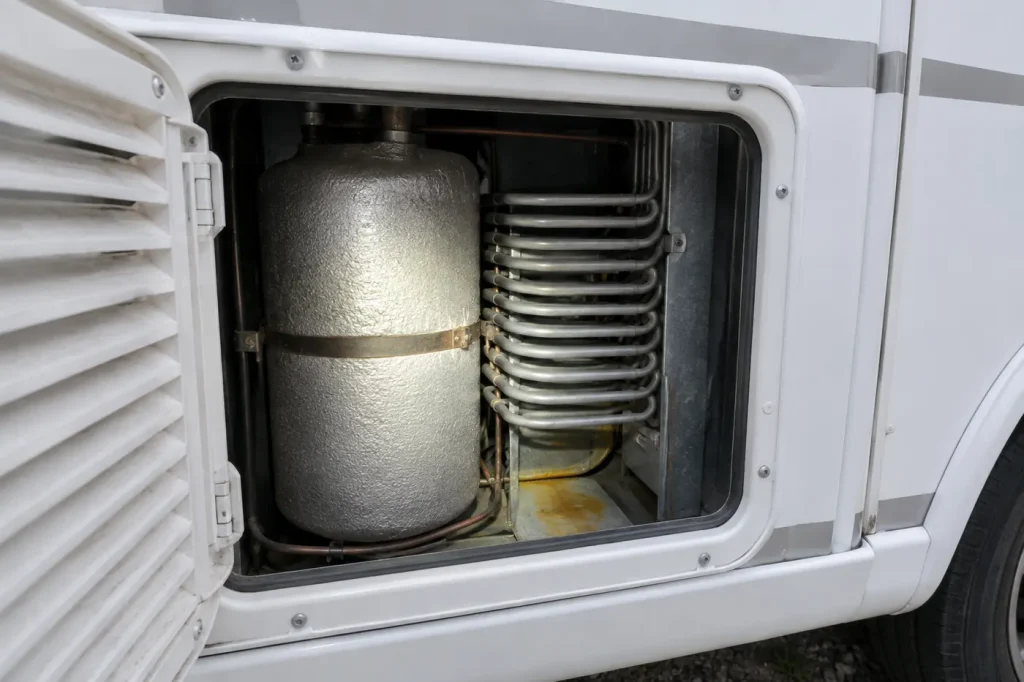
Absorption fridges, the kind most Norcold and Dometic RVs have, cool with a sealed system called the cooling unit. Both makers say it is under pressure. Dometic says it holds ammonia, sodium chromate (a chemical added to slow corrosion) and other chemicals. An ammonia smell means that sealed system is very likely leaking.
- Crack in the boiler tube A Dometic recall notice describes a fatigue crack in the boiler tube that lets pressurized coolant escape.
- Leak elsewhere in the cooling unit A recall filing for Norcold 1200-series fridges describes a failure that lets the liquid solution leak out slowly.
- Damage from tools or impact Dometic warns that chipping frost with a knife or ice pick can create a leak in the ammonia system.
- Running far off level Norcold says running beyond its level limits can damage the cooling system.
- Not ammonia at all A rotten egg smell is propane. A smoky, fume smell comes from the burner area, which Dometic ties to a damaged or dislocated burner.
Why an ammonia leak is serious
Dometic says a high concentration of ammonia can cause fluid in the lungs and chemical burns to the eyes, lungs and skin, and the coolant can catch fire if it meets an open flame. Norcold says the contents can cause severe skin and eye burns and can ignite and burn with an intense flame. Repeated or long contact with sodium chromate can cause organ damage or cancer, Dometic adds. The burner, which sits right next to the boiler, is an open flame. That is why every step below starts with shutting off heat and getting people out.
Step-by-step: what to do when your RV fridge smells like ammonia
These steps follow the Dometic manuals, which list the most detailed owner response. Norcold’s manuals say the same thing in fewer words: do not repair or recharge the cooling system yourself.
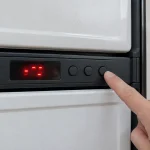
- Turn the fridge off at the panel Use the ON/OFF button on the front control panel. This stops the burner or the heater from heating a leaking system. Do not open the fridge or freezer doors.
-
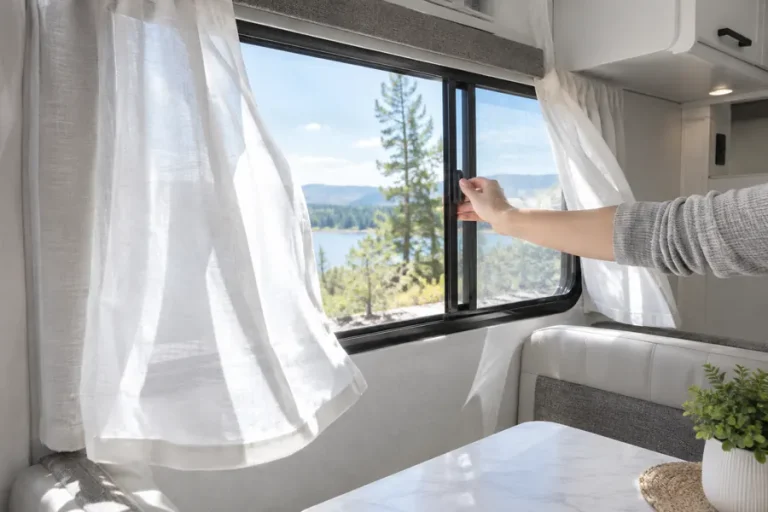
Air out the RV and get out Open the windows and the entry door, then leave. Stay outside until the smell is gone. If anyone has trouble breathing or eye pain, call 911.
Open windows and the door, then step outside -
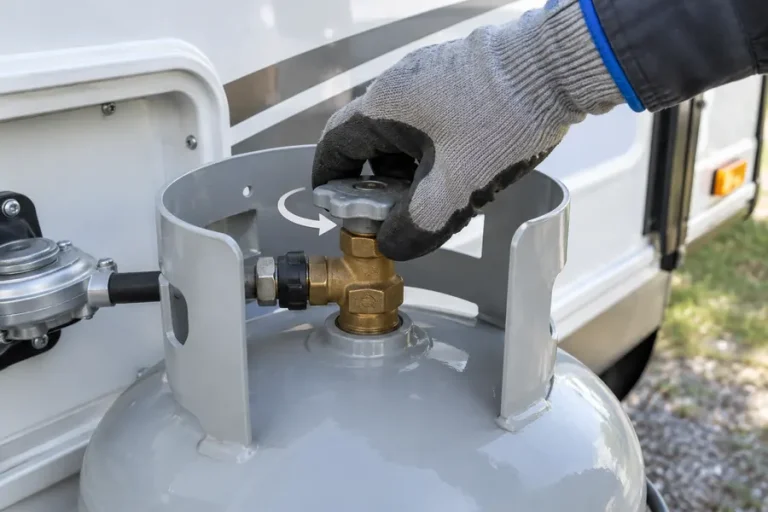
Shut off the propane Dometic says to turn off the manual LP gas valve at the back of the fridge, which you reach through the lower outside vent. If you cannot reach it without breathing the fumes, close the valve on the propane tank instead.
Close the tank valve if you cannot reach the fridge valve safely - Disconnect 120V Unplug the fridge cord at the back, through the same lower vent. Norcold’s recall instructions also say to unplug through the service vent and disconnect from shore power. If you cannot reach the plug, switch off the fridge breaker in the RV panel.
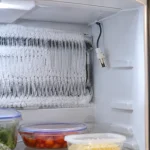
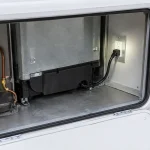
- Look, do not touch Once the smell has cleared, look at the back of the fridge through the lower vent with a flashlight. Dometic’s recall notice lists leakage or staining at the back, yellow residue at the back or sides, an ammonia smell, and poor cooling as signs. Norcold’s kit instructions say yellow residue around the heaters comes from the cooling liquid and may mean replacing the whole cooling unit. Do not wipe it with bare hands.
- Do not restart it to test Dometic says never to try to solve a cooling problem by restarting the fridge again and again, and not to use it until it has been repaired. Norcold’s recall papers say extended operation of a leaking cooling unit could cause a fire, and that a leaking unit must not run in any mode until it is replaced.
- Check for a recall Search your RV’s VIN at nhtsa.gov/recalls, and search the fridge brand under equipment. Norcold recall 10E-049 covers 1200, 1201, 1210 and 1211 fridges made on or before October 7, 2010, within set serial ranges, with a high temperature sensor kit as the fix. Dometic’s 2006 notice covers models including RM2652, RM2662, RM2852 and RM2862 made from April 1997 to May 2003. The model and serial number are on the label inside the fridge; read them only after it has aired out.
- Call a tech for a diagnosis A sealed cooling unit cannot be patched or recharged by an owner. The fix is a new cooling unit or a new fridge. Dometic says refrigerant must be recovered by a licensed technician who is EPA certified, so leave removal and disposal to a shop.
Before you call, note what you saw: the smell, any yellow stains, any code on the display, and the model and serial number. It shortens the shop’s diagnosis, and shops bill by the hour.
Norcold vs Dometic: leak warnings and codes
Dometic. The DM, DMA and RM1350 manuals give the full list for an ammonia smell: turn it off at the front panel, do not open the doors, air out the RV and leave, close the manual gas valve at the back, unplug 120V at the back, and call for service. DMR and DMC models flash the left and middle temperature LEDs when the cooling unit has overheated (or its overheat thermostat is unplugged) and needs service. On the RM1350, E3 means the cooling unit has malfunctioned.
Norcold. Several Norcold boards watch the cooling unit. Some 1200 and N41X/N51X models show “no co” or “n” when it stops cooling; you can reset it once, and if it returns, call a dealer. Some larger models show “LI oP” when a high temperature limit switch opens. Our Norcold error code guide covers both.
12V compressor fridges do not use ammonia. Dometic names tetrafluoroethane as the refrigerant in its compressor models, so an ammonia smell points to an absorption fridge. For how the cooling unit works, see our RV fridge repair guide.
Tools and parts for this fix
Only what this guide uses. For parts, match the part number in your unit's manual before you order.
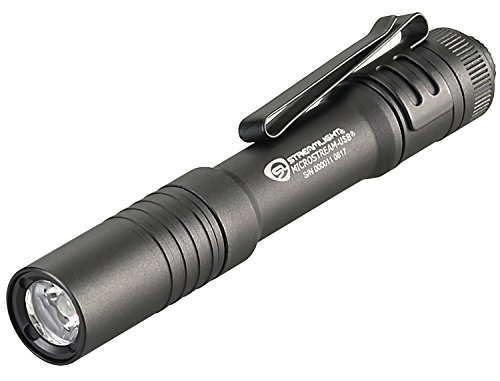
Streamlight MicroStream USB flashlight
Look through the lower vent for yellow residue or staining once the smell has cleared.
Check price on Amazon
ThxToms chemical resistant nitrile gloves
Wear them near the fridge so bare hands never touch the yellow coolant residue.
Check price on Amazon
As an Amazon Associate we earn from qualifying purchases, at no extra cost to you.
When to call an RV tech
- Any ammonia smell from the fridge, even if it fades.
- Yellow residue or staining at the back or sides of the fridge.
- A fume or smoky smell from the burner area.
- A “no co” or “n” code that returns after one reset, or “LI oP” on a Norcold.
- The fridge will not cool on any power source. Our RV fridge not cooling guide shows how to rule out the simple causes first.
Not sure the smell is the fridge? Our RV problem finder starts from the symptom.
Common questions
Why does my RV refrigerator smell like ammonia?
Because the sealed cooling unit is most likely leaking. Absorption fridges use ammonia as the refrigerant, so you should never smell it in normal use. Turn the fridge off, keep the doors shut, air out the RV and call a tech.
How serious is an RV fridge ammonia leak?
Serious enough to stop using the fridge right away. Dometic warns that high ammonia levels can cause fluid in the lungs and chemical burns, and that the coolant can catch fire near an open flame. Norcold says the contents can cause severe burns and burn with an intense flame.
Can an RV fridge ammonia leak be fixed?
Not by recharging it. Norcold says not to try to repair or recharge a defective cooling system. A tech replaces the cooling unit or the whole fridge, and parts and labor vary by model.
What is the yellow residue behind my RV fridge?
It is most likely dried cooling liquid from a leak. Dometic’s recall notice lists yellow residue at the back or sides as a sign, and Norcold’s kit instructions say yellow residue around the heaters comes from the cooling liquid. Do not touch it with bare hands, and have the fridge checked.
Is it safe to run my RV fridge on electric if it smells like ammonia?
No. Dometic says to turn it off and not use it until it has been repaired. Norcold’s recall papers say a leaking cooling unit must not run in any mode until it is replaced. Electric mode still heats the boiler, so a leaking unit keeps losing coolant on any power source.
Does Freon smell like ammonia?
Absorption RV fridges do not use Freon; they use ammonia. 12V compressor fridges use a different refrigerant, which Dometic names as tetrafluoroethane. If the smell is clearly ammonia, the source is almost always an absorption fridge’s cooling unit.
Sources
- Dometic DM and DMA Refrigerators Operating Manual (3317001.000)
- Dometic RM1350 Operating Instructions (Forest River copy)
- Dometic DMR/DMC 7-Series Installation and Operating Instructions (Forest River copy)
- Norcold N62X, N64X, N82X and N84X Owner's Manual (635488C)
- Dometic refrigerator recall owner notice, 1997 to 2003 models (NHTSA copy)
- Norcold recall 10E-049 safety notice, 1200/1201/1210/1211 (NHTSA copy)
- Norcold 1200 series recall filing with Norcold thermal switch kit instructions (NHTSA copy)