RV water pump runs but no water comes out
The pump hums, but the faucet stays dry or just spits air. Here is how to find where the water stops, from the tank to the tap, using the pump makers' own checks.
 By Complete RV Guide team
Updated Oct 25, 2026
9 min read
Quick answer
A pump that runs dry is almost always starved or sucking air: an empty tank, a winterizing valve still set to the antifreeze port, a clogged inlet strainer, or a loose inlet fitting. Check the tank and valves, rinse the strainer, then open the nearest cold faucet and let the pump run until the air clears.
- Difficulty
- Easy
- Time
- 15-60 min
- Parts cost
- Usually $0A strainer screen or pump head kit varies by pump model
What you'll need
- Multimeter
- Flashlight
- Bucket
- Towels
- Screwdriver
Tool links go to Amazon. As an Amazon Associate we earn from qualifying purchases, at no extra cost to you.
Common symptoms
- The pump hums or buzzes nonstop, but nothing comes out of the faucet.
- Water spits and sputters out of the tap with bursts of air.
- You get a short splash, then the flow dies while the pump keeps running.
- It stopped pumping right after you de-winterized the RV.
Quick checks before anything else
- Look at the fresh tank itself, not the panel gauge, and confirm there is water in it.
- The winterizing valve at the pump is turned to draw from the tank, not from an antifreeze hose.
- Any tank fill or diverter valve is set back to normal, not to fill.
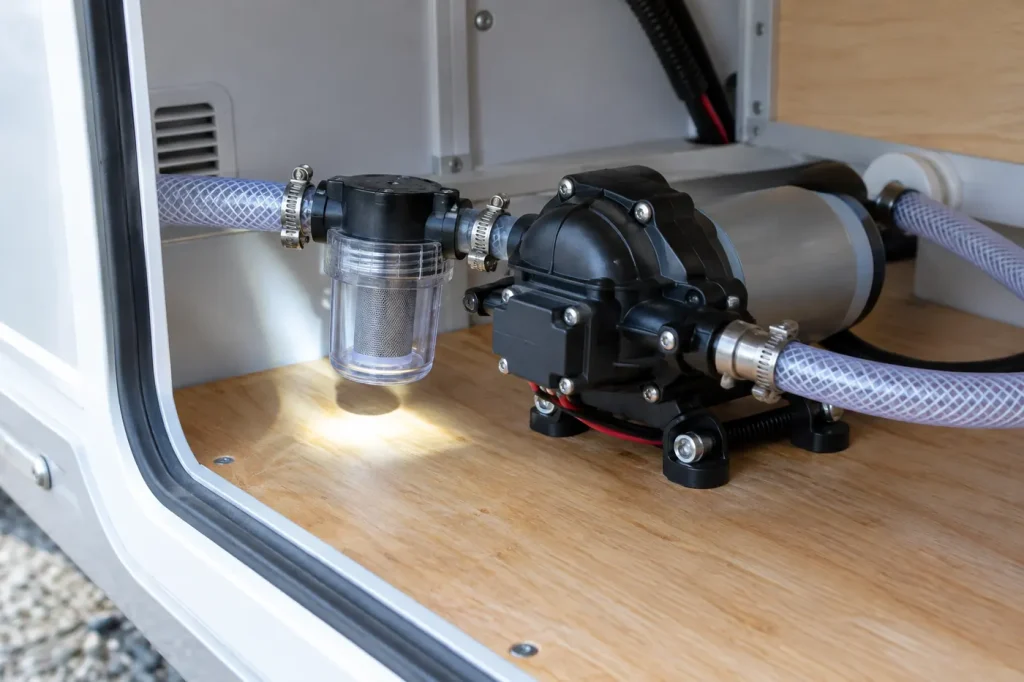
- The clear strainer bowl on the pump inlet is clean and screwed on snug.
- One faucet is open while the pump runs, so trapped air has somewhere to go.
- If you just de-winterized, the hoses are connected to both pump ports.
What causes a pump to run with no water?
A diaphragm pump moves water by pulling it in on one stroke and pushing it out on the next. If it cannot pull water in, it just spins. So almost every cause sits on the suction side, between the tank and the pump.
- Empty tank or a valve set wrong The pump has nothing to pull, or it is pulling from the antifreeze port.
- Clogged strainer The flow is weak at first, then sputters, then stops.
- Air leak on the inlet side A loose clamp, fitting or strainer bowl lets the pump suck air instead of water.
- Air trapped in the lines or water heater Faucets spit and cough, and the hot side is worst.
- Debris in the pump valves or dry, stuck valves Common after storage or a sanitizing flush.
- Low voltage or a damaged pump A slow, weak pump, or a cracked housing or torn diaphragm after a freeze.
Step-by-step: get water flowing again
When your RV water pump runs but no water comes out, work from the tank toward the faucet. The early steps are free. Turn the pump off and open a faucet to release pressure before you loosen any fitting.
- Fresh tankWater above the tank outlet
- Tank and winterizing valvesSet to draw from the tank
- Inlet strainerScreen clean; Shurflo calls for 50 mesh
- Pump inlet hoseTight, with no air leaks
- Pump valves and diaphragmFree of debris, not cracked
- Steady water at the faucet?
Yes: close the faucet. The pump should build pressure and stop.
No: go back up the list. The fault sits at the first point where water stops.
- Check the tank with your eyes RV tank gauges often read wrong, so look at the tank or add a few gallons and listen. If the RV is parked nose up or tilted, water can sit away from the tank outlet, so the pump pulls air even with water in the tank. Level the RV and try again.
- Set the valves back to normal Find the winterizing valve near the pump. It is usually a small lever or a three-way valve with a short hose. Turn it so the pump draws from the tank. Remco also lists a tank fill (diverter) valve left in fill mode as a cause of a pump that keeps running. Close or turn any valve used to fill the tank.
-
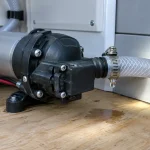
Clean the inlet strainer Unscrew the clear bowl on the pump inlet and rinse the screen under a tap. Shurflo says a strainer is required and names a clogged one as the first cause of a pump that will not prime. Remco says the screen must be cleaned on a regular basis or it will restrict water to the pump.
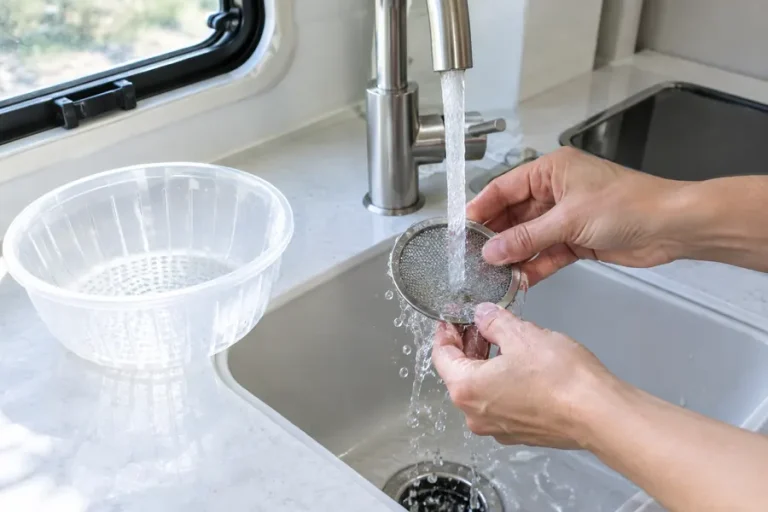
Rinse the screen until the mesh is clear - Do a gravity flow test If your tank sits higher than the pump, pull the inlet hose off at the strainer with the pump off and hold it over a bucket. Water should run out freely. Remco says water should flow from the tank at 2 gallons per minute (gpm) or more. A trickle means a kink, a blocked tank outlet or a closed valve before the pump. A strong flow means the problem is the pump or an air leak at its connections.
-
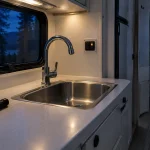
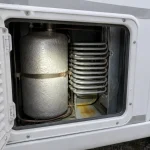
Bleed out the air Open the cold faucet closest to the pump, switch the pump on, and let it run until the flow is steady with no spitting. Then do each faucet, hot side too. Shurflo names air collected in the water heater as a cause, and a drained RV water heater has to fill before any hot tap flows. When Remco installs a new pump, it runs it 10 to 15 seconds to clear the air inside.
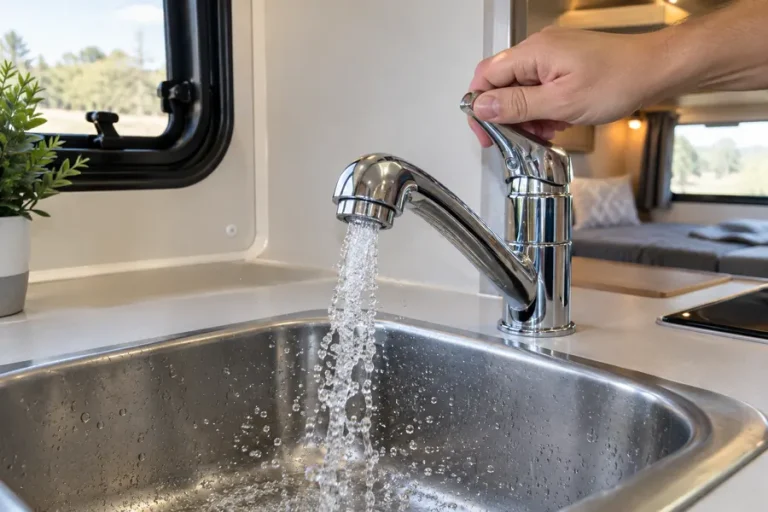
Let each faucet run until the spitting stops - Hunt for air leaks on the inlet side Shurflo asks whether the inlet tubing is sucking in air at plumbing connections, which it calls a vacuum leak. This kind of leak lets air in rather than water out, so you rarely see a drip. Tighten hose clamps, check the strainer bowl and look for cracked barbs. On Remco and Flojet pumps with push-in ports, make sure each retainer clip is fully pushed down and the O-ring is in place.
- Check the outlet side for blocks Shurflo lists severely restricted or kinked plumbing and restrictive valves on both the inlet and the outlet. Look for a pinched hose behind the pump and a clogged whole-house filter cartridge. Bypass any filter while you test.
- Measure voltage at the pump while it runs Shurflo says to check for proper voltage with the pump operating, within 10% of the rating, and that lower voltage means lower flow. Remco’s test: read the voltage at the pump wires with the pump off, then again with a faucet open and the pump running. If it drops more than 1 volt, the wiring is too light. Remco’s Aquajet also shuts itself off below 11.5 volts.
- Flush debris out of the pump valves Tiny bits of grit can hold the one-way valves inside the pump open, so it moves no water. Remco’s fix is to turn on all the hot and cold faucets all the way and let the water run for a few minutes. Shurflo adds that valves can also be swollen or dry after long storage, and that sealer or Teflon tape on the fittings can get into the pump and stop it from priming.
- Look for freeze damage or a worn pump head Shurflo lists a cracked pump housing and loose drive assembly screws as causes. Look for cracks in the plastic head and water in the motor end, which Shurflo says points to a punctured diaphragm. If you find damage, replace the pump head with the kit for your model, or the whole pump.
Just de-winterized? Shurflo and Remco both tell owners to remove the plumbing at the pump ports for winter and leave it off. Shurflo even suggests a “plumbing is disconnected” note at the tank filler. Reconnect both hoses, turn the winterizing valve back to the tank, return the water heater bypass to normal, and sanitize the system before you use the water again, as Shurflo advises.
Stop. If the pump may be frozen, do not run it. Remco warns that starting a frozen pump can damage the pump and motor. Thaw the RV first, then check the pump and lines for cracks before you switch it on.
Shurflo vs Remco vs Flojet: what differs
The checks above work for any 12V diaphragm pump. A few details differ by brand, so read the label on your pump before you order parts. Our RV water pump guide lists the full specs side by side.
Shurflo 4008. A bypass pump that shuts off at 55 psi (pounds per square inch). Shurflo wants it within 6 feet of the tank, with 1/2 inch inside diameter plumbing and flexible hose on both ports. Smaller plumbing, it says, causes cavitation (bubbles that form when the pump pulls harder than water can follow), low flow and noise.
Remco Aquajet. A variable-speed pump that Remco rates to prime up to 14 feet. It has a low-voltage cutoff at 11.5 volts, so a weak battery can stop it cold. Its ports are push-in fittings held by a retainer slide with an O-ring seal. Remco says not to adjust its pressure switch without asking the factory, and to call the factory about a perforated diaphragm.
Flojet R3426504A. A smaller pump that primes up to 8 feet and shuts off at 30 psi. It uses quick-connect ports with clips. Flojet says a strainer is required in all installs to keep the check valves and pressure switch from clogging.
If the pump runs fine but never stops once water flows, that is a different fault. Our guide to an RV water pump that keeps running covers it.
Tools and parts for this fix
Only what this guide uses. For parts, match the part number in your unit's manual before you order.

Reads voltage at the pump wires while it runs, which should be within 10% of rated.
Check price on Amazon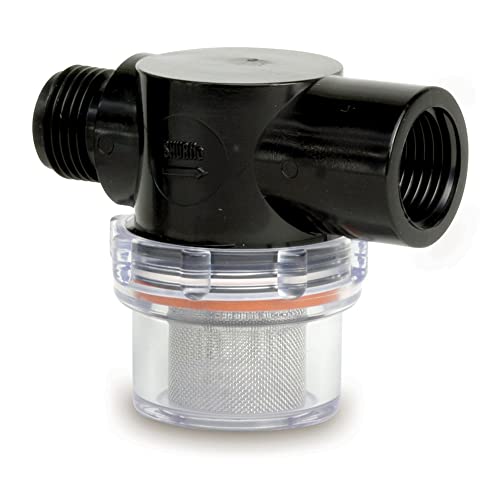
SHURflo 255-313 pump inlet strainer
Replaces a clogged or cracked inlet strainer bowl that lets the pump suck air.
Check price on Amazon
As an Amazon Associate we earn from qualifying purchases, at no extra cost to you.
When to call an RV tech
- The lines or water heater froze and you see cracks or wet spots you cannot reach.
- The tank outlet itself is blocked inside the tank.
- The pump wiring drops more than 1 volt and needs a heavier wire or a relay, which Remco recommends a qualified tech install if you are unsure.
- The pump keeps blowing its fuse. That points to wiring, which our RV electrical guide covers.
- Water is leaking from the pump head as well, which we cover in RV water pump leaking.
Common questions
Why is my RV water pump running but not pumping water?
It is not getting water, or it is pulling air. The usual causes are an empty tank, a winterizing valve set to the antifreeze port, a clogged strainer, or an air leak at an inlet fitting. Less often, debris holds the pump’s valves open or a freeze cracked the pump head.
How do I prime my water pump in my RV?
Make sure the tank has water and the valves are set to draw from it. Open the cold faucet nearest the pump, switch the pump on, and let it run until the water flows without air. Then bleed each other faucet, hot side included. If it will not prime after a minute or two, stop and check the strainer and inlet fittings.
How do I reset my RV water pump?
Most RV pumps have no reset button. Turn the pump switch off, check its fuse, and let a hot motor cool: Shurflo and Remco pumps have a thermal protector that resets on its own. Then switch it back on with a faucet open.
Why won’t my RV water pump work after winterizing?
Most often a winterizing step was not undone. Check that both pump hoses are reconnected, the winterizing valve is back on the tank, and the water heater bypass is back to normal. If the RV froze before it was winterized, check the pump for cracks before you run it.
How do I tell if my RV water pump is bad?
Rule out the tank, valves, strainer, air leaks and voltage first. If water flows freely from the tank to the pump inlet, the pump gets good voltage, and it still moves no water after a full-flow flush, the valves or diaphragm are worn. Water in the motor end or a cracked head also means it is time for a pump head kit or a new pump.